Feedstock specification
Material availability, moisture, particle size, ash and contaminants establish the preparation and process basis.
Circular Energies · Technology
Pyrogasification combines primary thermal decomposition with a downstream gas-conversion and conditioning stage. ECircular applies this route to selected feedstocks and real industrial energy needs.
The engineering principle
In the primary stage, prepared material is thermally decomposed in an oxygen-limited environment. The gas and vapour stream then passes to secondary conversion and conditioning, with the solid carbon fraction managed through a separate pathway.
The design objective is useful gas quality and dependable integration. Feedstock preparation, process controls and gas-cleaning requirements are defined together rather than treated as separate afterthoughts.
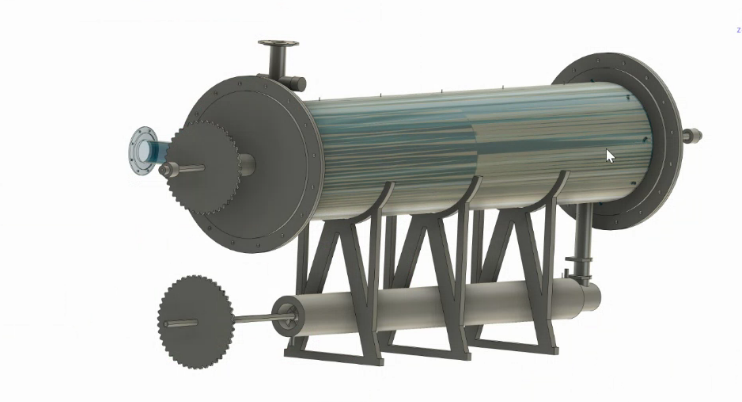
Explore the operating sequence
Select a stage to see its purpose and the decision it supports. This is a simplified process explanation; the engineered configuration is developed for each project.
Every project starts with the material. Identify its source, quantity, moisture, ash, contamination and consistency. Separate recoverable recyclables and remove unsuitable materials before selecting the preparation and feeding arrangement.
The resulting basis
A defined feedstock specification and a reliable supply plan.
Understanding syngas
Syngas commonly contains hydrogen and carbon monoxide, alongside other gases. Feedstock, moisture, conversion conditions and the process configuration influence its composition and heating value.
H₂ + CO + other gases
This is a composition description, not a chemical equation or a guaranteed gas specification.
From an operating concept to a viable plant
Material availability, moisture, particle size, ash and contaminants establish the preparation and process basis.
Temperature, operating stability, gas quality and delivered heat are reviewed against the application's requirements.
Gas cleanup, stack testing and residue characterisation form part of the site-specific validation and permitting work.
ECircular is designed for controlled operation. Final environmental compliance is established through the applicable local approval process and measured performance of the installed system.
A qualified carbon pathway
Biomass-derived char can store carbon in an appropriate durable application. Its suitability depends on feedstock origin, material properties, contaminants, carbon stability and the intended use.
Carbon-removal value requires an eligible methodology, lifecycle accounting, measurement, reporting and verification. Emissions from processing, transport and the energy pathway are part of that assessment.
Plastic-derived carbon and residues from mixed feeds follow a separate assessment. They are not automatically biochar, a soil product or verified carbon removal.
General conversion principles can be explored through these primary technical sources. CEPL product details and milestones are drawn from company project materials.
Bring us your feedstock and energy requirement so we can assess a suitable engineering route.